

Introduction
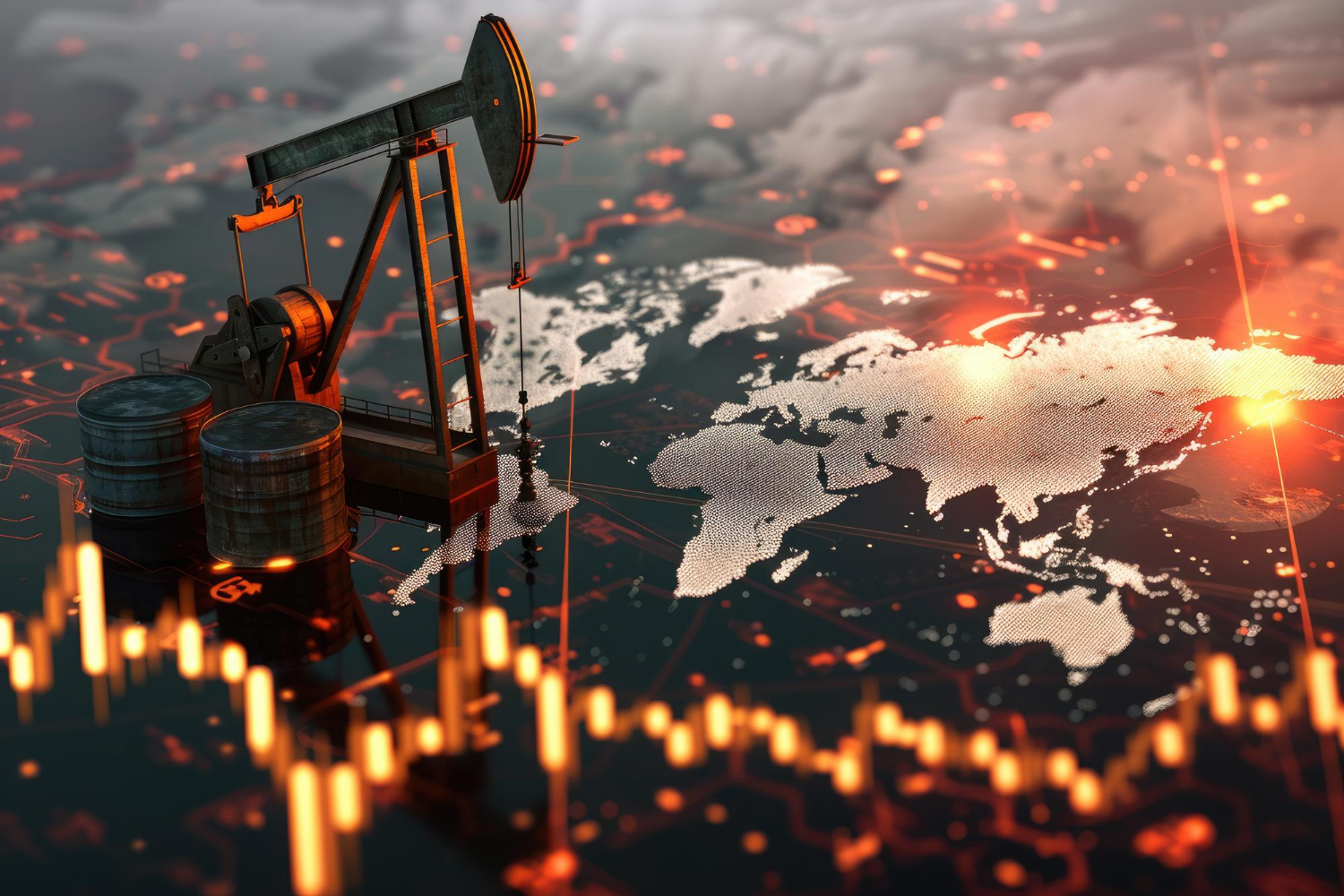
Oil has long been the lifeblood of the global economy. From powering transportation and industry to influencing food prices and financial markets, crude oil remains one of the most strategically important commodities in the world. For decades, fluctuations in oil prices have been closely linked to inflation, economic cycles, and geopolitical tensions. Today, however, the oil market has evolved into something even more consequential: a central risk to global economic growth.
The world economy is already navigating a complex landscape marked by rising debt levels, fragile supply chains, geopolitical conflicts, climate transitions, and uneven post-pandemic recovery. Within this fragile environment, oil markets have become increasingly volatile, unpredictable, and politically sensitive. A sudden spike or crash in oil prices now reverberates across industries and nations faster than ever before. The interconnected nature of global trade, finance, and energy has amplified oil’s ability to disrupt economic stability.
This article explores how oil markets have transformed into the biggest risk to global growth, examining the forces behind supply volatility, geopolitical tensions, the energy transition dilemma, inflationary pressures, and the potential pathways forward.
The Return of Oil Market Volatility
For much of the 2010s, oil prices remained relatively stable compared to the dramatic boom-and-bust cycles of earlier decades. Technological advancements such as U.S. shale production, improved energy efficiency, and diversified supply chains created a perception that the oil market had become more resilient. That perception has now proven overly optimistic.
In recent years, oil markets have entered a new era of extreme volatility. Prices have swung sharply due to pandemics, wars, supply disruptions, and policy decisions. Unlike past cycles driven primarily by demand shocks or supply shortages, today’s volatility stems from a complex combination of both.
One of the most significant turning points was the COVID-19 pandemic. In early 2020, global oil demand collapsed as lockdowns halted travel and industrial activity. For the first time in history, oil futures briefly traded at negative prices. This unprecedented event exposed the fragility of global energy systems and demonstrated how quickly demand can evaporate.
The rebound was equally dramatic. As economies reopened, demand surged faster than supply could recover. Oil producers had cut investments during the pandemic and were unable to ramp up production quickly. The result was a sharp price spike that contributed to global inflation.
This new volatility is dangerous because it creates uncertainty for businesses and governments. Companies struggle to plan investments when energy costs fluctuate wildly, while policymakers find it harder to maintain stable inflation and growth.
Volatility also affects financial markets. Oil price shocks often trigger stock market declines, currency fluctuations, and shifts in investor sentiment. Because energy is embedded in nearly every sector, oil price instability has become a systemic risk rather than a sector-specific issue.
Geopolitics and the Weaponization of Energy
Oil has always been intertwined with geopolitics, but recent developments have elevated energy to the center of global power struggles. Major oil-producing regions are increasingly affected by political instability, conflicts, and strategic rivalries.
Conflicts in energy-rich regions can quickly disrupt global supply. Wars, sanctions, and political tensions have repeatedly removed millions of barrels of oil from the market. These disruptions are no longer rare events; they are becoming a recurring feature of the global energy landscape.
Energy is also being used as a strategic weapon. Countries with significant oil reserves have gained leverage in diplomatic and economic negotiations. By controlling supply levels, major producers can influence global prices and shape economic outcomes far beyond their borders.
The growing rivalry between major global powers has intensified this dynamic. Energy security has become a national priority for many nations, leading to stockpiling, trade restrictions, and new alliances. This shift toward energy nationalism has weakened global cooperation and increased market fragmentation.
Another concern is the concentration of supply. A relatively small number of countries control a large share of global oil production. Any disruption in these regions—whether due to political unrest, natural disasters, or policy decisions—can send shockwaves through the global economy.
The weaponization of energy increases uncertainty and reduces trust among nations. When countries fear supply disruptions, they respond by prioritizing self-sufficiency over cooperation. This trend threatens globalization and may lead to higher costs and slower economic growth worldwide.
The Energy Transition Paradox
The global shift toward cleaner energy is essential for addressing climate change, yet it has created a paradox that is destabilizing oil markets. While governments and investors are pushing for reduced reliance on fossil fuels, global demand for oil remains high and continues to grow in many regions.
This mismatch between long-term goals and short-term reality is creating a dangerous supply gap. Oil companies are under pressure to reduce investments in fossil fuel projects due to environmental concerns, regulatory policies, and shareholder expectations. As a result, fewer new oil fields are being developed.
However, renewable energy infrastructure is not yet capable of fully replacing oil. Transportation, aviation, shipping, and heavy industry still rely heavily on petroleum products. Emerging economies, in particular, continue to increase oil consumption as they industrialize and urbanize.
This creates a structural imbalance: demand remains strong while supply investment declines. The result is tighter markets and higher price sensitivity to disruptions.
The energy transition also introduces uncertainty about future demand. Oil producers hesitate to invest in long-term projects if they fear declining demand in the future. Yet without new investments, supply shortages become more likely in the present.
This paradox has made oil markets more fragile. Instead of a smooth transition from fossil fuels to renewables, the world may face a prolonged period of energy instability characterized by price spikes and supply shortages.
Such instability threatens global growth by increasing costs for businesses, reducing consumer purchasing power, and complicating economic planning.
Inflation, Interest Rates, and Economic Slowdown
One of the most direct ways oil markets affect global growth is through inflation. Oil prices influence transportation, manufacturing, agriculture, and energy costs, making them a key driver of overall price levels.
When oil prices rise sharply, the cost of producing and transporting goods increases. Businesses often pass these costs on to consumers, leading to higher prices across the economy. This phenomenon, known as cost-push inflation, can quickly spread across sectors.
High inflation forces central banks to raise interest rates in an effort to stabilize prices. While higher rates can reduce inflation, they also slow economic growth by making borrowing more expensive for businesses and consumers.
This creates a dangerous cycle. Rising oil prices lead to inflation, which leads to higher interest rates, which then reduce investment and consumption. The result is slower economic growth or even recession.
Emerging economies are particularly vulnerable. Many rely heavily on imported oil and have weaker currencies. When oil prices rise, their import bills increase, putting pressure on government budgets and foreign exchange reserves.
Higher energy costs can also lead to social and political unrest. Rising fuel and food prices have historically sparked protests and instability in many countries. Such unrest can further disrupt economic activity and reduce investor confidence.
In this way, oil markets do not just influence growth—they can trigger cascading economic and political consequences that amplify global instability.
Supply Constraints and the Risk of Structural Shortages
A growing concern in the oil market is the possibility of structural supply shortages. Years of underinvestment, combined with rising demand, have reduced spare production capacity.
In the past, oil markets often had a buffer—unused production capacity that could be activated during disruptions. Today, that buffer has shrunk significantly. This means that even small disruptions can have outsized effects on prices.
Supply chains have also become more complex and fragile. Oil production depends on a global network of equipment, technology, and skilled labor. Disruptions in any part of this network can delay production and reduce supply.
Climate-related events add another layer of risk. Extreme weather can disrupt production, refining, and transportation infrastructure. Hurricanes, floods, and heatwaves are increasingly affecting energy systems around the world.
As spare capacity declines, markets become more sensitive to shocks. This increases the likelihood of sudden price spikes that can destabilize economies.
Structural shortages could also accelerate geopolitical competition for resources. Countries may compete more aggressively for access to energy supplies, increasing the risk of conflict and trade tensions.
Without significant investment and improved coordination, supply constraints could become a persistent feature of oil markets, posing a long-term threat to global growth.
Conclusion
Oil markets have always influenced the global economy, but their role has become more complex and more dangerous in recent years. Volatility, geopolitical tensions, the energy transition paradox, inflationary pressures, and supply constraints have combined to make oil one of the biggest risks to global economic growth.
The world is entering a period where energy systems are undergoing a historic transformation while still relying heavily on fossil fuels. This transition is creating instability that affects businesses, governments, and households alike.
Managing this risk will require coordinated global action. Governments must balance climate goals with energy security, encourage investment in both renewable and transitional energy sources, and strengthen international cooperation. Businesses must adapt to an era of higher energy uncertainty, investing in efficiency and diversification.
The stakes are high. Stable and affordable energy is essential for economic prosperity. Without careful management, oil market instability could slow growth, increase inequality, and deepen geopolitical tensions.
The future of global growth may depend on how successfully the world navigates the challenges of oil market volatility.