

Introduction
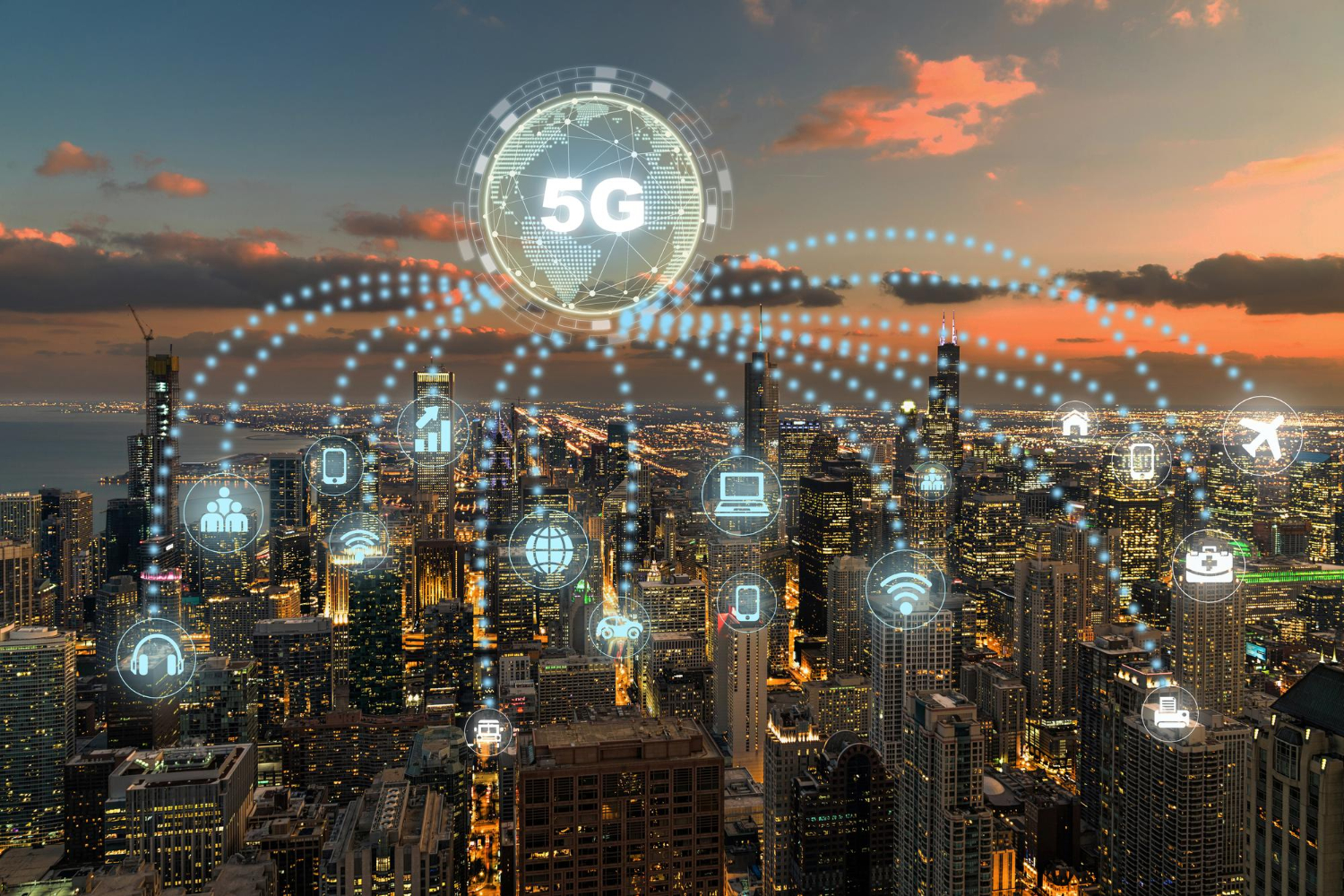
In the last decade, two technological paradigms have captured the imagination of researchers, businesses, and consumers alike: 5G technology and blockchain networks. Each of these innovations promises to transform the way data is transmitted, stored, and secured across digital ecosystems. 5G technology, the fifth generation of wireless communication, offers unprecedented speed, minimal latency, and massive device connectivity, enabling new horizons for applications ranging from augmented reality to autonomous vehicles. On the other hand, blockchain technology, a decentralized and distributed ledger system, has emerged as a revolutionary solution for secure data management, transaction transparency, and trustless interactions across digital networks.
While both 5G and blockchain have independently attracted significant attention, the convergence of these technologies presents a unique opportunity to address some of the most pressing challenges facing blockchain networks today. Blockchain networks, particularly those handling large volumes of transactions, often suffer from latency issues, high energy consumption, and scalability constraints. By integrating the ultra-low latency, high throughput, and massive device connectivity offered by 5G, blockchain networks can achieve faster transaction processing, improved scalability, and enhanced security features. This essay explores the multifaceted role of 5G technology in enhancing blockchain networks by analyzing three critical dimensions: network speed and latency, IoT integration and decentralization, and security and data integrity. Through this exploration, it becomes evident that 5G is not merely a complementary technology but a foundational enabler that can redefine the operational efficiency and potential of blockchain networks.
Accelerating Blockchain Performance: Network Speed and Latency
One of the primary limitations of blockchain networks, particularly public blockchains like Ethereum and Bitcoin, is transaction speed. Traditional blockchain networks rely on a consensus mechanism—such as proof-of-work (PoW) or proof-of-stake (PoS)—to validate transactions and maintain the integrity of the distributed ledger. While these mechanisms ensure security and decentralization, they also introduce significant delays, often measured in minutes or even hours, depending on network congestion. This latency becomes a critical bottleneck in applications requiring real-time transaction processing, such as financial services, supply chain management, or autonomous systems.
5G technology, with its ultra-low latency (as low as 1 millisecond) and high bandwidth (up to 10 Gbps), has the potential to mitigate these limitations significantly. The reduction in latency enables blockchain nodes to communicate almost instantaneously, which accelerates consensus processes and reduces block confirmation times. In private and permissioned blockchain networks, which are increasingly used in enterprise solutions, 5G can facilitate faster data propagation between nodes, ensuring that updates to the ledger are synchronized in near real-time. This improvement is particularly valuable for high-frequency transactions in financial markets, where every millisecond can have a significant economic impact.
Moreover, 5G’s enhanced network capacity allows blockchain networks to scale more effectively. As the number of participants and the volume of transactions increase, traditional network infrastructures often struggle to handle the load, leading to congestion and delays. 5G’s ability to support massive device connectivity—up to a million devices per square kilometer—ensures that blockchain nodes can operate simultaneously without performance degradation. This capability is crucial for distributed applications such as decentralized finance (DeFi) platforms, where multiple smart contracts interact concurrently and require immediate validation.
Additionally, edge computing, a feature often associated with 5G networks, complements blockchain performance by enabling localized transaction processing. By offloading some computational tasks to edge nodes closer to the source of data, blockchain networks can reduce the burden on central servers, further enhancing transaction speed and efficiency. For instance, in a supply chain scenario, IoT sensors at a warehouse can process and validate shipments locally before recording them on the blockchain, reducing latency and improving operational responsiveness.
In summary, 5G technology addresses the speed and latency challenges inherent in blockchain networks, enabling faster transaction processing, efficient consensus mechanisms, and scalable network operations. This enhancement not only improves performance but also opens the door to new blockchain applications that were previously impractical due to network constraints.
Enabling Seamless IoT Integration and Decentralization
The rise of the Internet of Things (IoT) has introduced billions of interconnected devices generating vast amounts of data in real time. Blockchain networks are increasingly recognized as a solution for managing IoT data securely and transparently, providing a decentralized framework that prevents data tampering, unauthorized access, and centralization risks. However, the integration of IoT with blockchain presents significant challenges, particularly in terms of connectivity, bandwidth, and data throughput.
This is where 5G technology plays a transformative role. The high-speed connectivity, ultra-low latency, and massive device support offered by 5G create an environment in which IoT devices can interact seamlessly with blockchain networks. In practical terms, this means that sensors, smart appliances, and industrial devices can record transactions, share data, and execute smart contracts in real time without overloading the network. For example, in smart cities, thousands of connected devices—from traffic lights to energy meters—can leverage blockchain for secure and automated operations, with 5G ensuring uninterrupted data transmission.
Furthermore, 5G supports enhanced decentralization in blockchain networks by facilitating distributed data processing across edge nodes. In traditional blockchain-IoT integrations, centralized gateways often handle data aggregation before recording it on the blockchain. This centralization introduces latency and creates potential points of failure. With 5G-enabled edge computing, IoT devices can interact directly with nearby blockchain nodes, creating a more decentralized architecture. This decentralization strengthens the core principles of blockchain by reducing reliance on centralized intermediaries, improving fault tolerance, and enhancing system resilience.
Another notable advantage of 5G in IoT-blockchain integration is energy efficiency. IoT devices are often resource-constrained, with limited battery life and computational capabilities. The high throughput and low latency of 5G allow devices to transmit smaller data packets more efficiently and reduce the need for repeated retransmissions. This efficiency conserves energy and prolongs device lifespan, making large-scale IoT deployments more sustainable. In sectors such as agriculture, healthcare, and logistics, this capability ensures continuous monitoring and secure data recording without compromising operational efficiency.
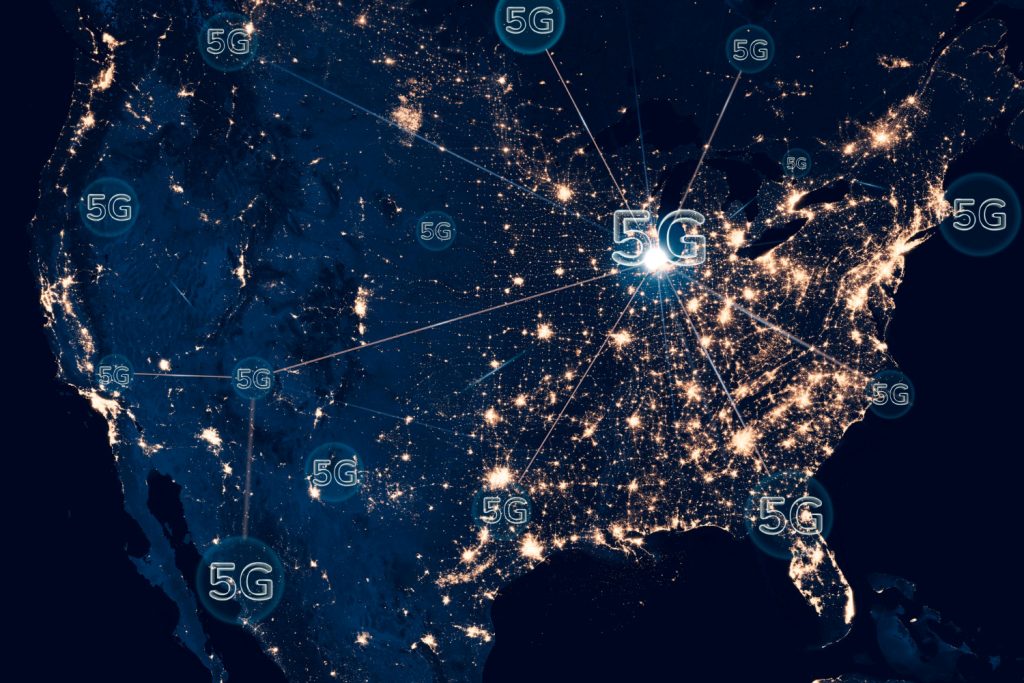
5G also enhances blockchain-based automation through smart contracts, enabling real-time decision-making at the device level. For instance, in industrial IoT settings, a machine could automatically trigger a payment transaction on the blockchain once a product is shipped or a sensor detects specific environmental conditions. This real-time automation, made possible by 5G, streamlines processes, reduces human intervention, and ensures that decentralized networks function efficiently and reliably.
In essence, 5G acts as a catalyst for the convergence of IoT and blockchain, providing the connectivity, scalability, and decentralization needed to create intelligent, autonomous, and secure digital ecosystems.
Strengthening Security, Data Integrity, and Trust
Blockchain technology is inherently secure due to its decentralized and cryptographic nature. However, the security and integrity of blockchain networks can be compromised by network latency, high-volume traffic, and insufficient infrastructure, which can delay transaction verification and create opportunities for attacks, such as double-spending or Sybil attacks. The integration of 5G technology can significantly strengthen blockchain security by enhancing network reliability, data integrity, and resilience against malicious actors.
First, 5G reduces transaction propagation delays, which is crucial for maintaining ledger consistency across nodes. In traditional networks, delays in transaction validation can result in temporary forks or inconsistencies, which attackers may exploit. With 5G, transactions are propagated almost instantaneously across the network, reducing the window of vulnerability and ensuring that all nodes maintain a consistent and tamper-proof ledger.
Second, 5G’s network slicing capabilities allow the creation of dedicated, secure channels for blockchain communication. Network slicing enables operators to partition the 5G network into isolated segments with specific performance and security characteristics. Blockchain networks can leverage these slices to guarantee uninterrupted and secure communication between nodes, even in the presence of high network congestion or cyberattacks targeting public infrastructure. This capability is particularly valuable for enterprise blockchain solutions handling sensitive data, such as financial records, healthcare information, or intellectual property.
5G also enhances data integrity and auditing in blockchain networks by supporting high-frequency monitoring and real-time validation. IoT devices, edge nodes, and blockchain validators can continuously exchange encrypted data with minimal delay, ensuring that every transaction is recorded accurately and verified immediately. This real-time verification not only reduces the risk of fraudulent transactions but also enables regulatory compliance and transparent auditing in sectors such as supply chain management, pharmaceuticals, and finance.
Moreover, the integration of 5G with blockchain can improve resilience against Distributed Denial of Service (DDoS) attacks, a common threat in decentralized networks. 5G’s high bandwidth and ability to manage massive simultaneous connections allow blockchain networks to absorb sudden spikes in traffic, maintaining operational continuity even under attack. By mitigating such vulnerabilities, 5G strengthens the overall trustworthiness and reliability of blockchain networks.
Finally, 5G supports enhanced privacy-preserving techniques, such as secure multi-party computation (SMPC) and zero-knowledge proofs (ZKPs), by enabling fast and reliable data exchange between multiple parties. These techniques allow sensitive information to be verified without revealing the underlying data, enhancing confidentiality while preserving transparency. This capability is particularly important in applications like healthcare and finance, where privacy and security are paramount.
In conclusion, 5G not only improves the speed and scalability of blockchain networks but also reinforces their security, data integrity, and trustworthiness, making decentralized applications more reliable, resilient, and enterprise-ready.
Conclusion
The convergence of 5G technology and blockchain networks represents a transformative synergy that addresses some of the most persistent challenges in decentralized digital ecosystems. By significantly reducing network latency, enhancing transaction speed, and supporting massive device connectivity, 5G accelerates blockchain performance and scalability. Its role in IoT integration enables seamless interaction between billions of devices and blockchain nodes, fostering decentralization, energy efficiency, and real-time automation. Furthermore, 5G strengthens security, data integrity, and trust within blockchain networks through low-latency transaction propagation, network slicing, and resilience against cyber threats.
As the digital landscape continues to evolve, the combined potential of 5G and blockchain is poised to redefine industries ranging from finance and healthcare to logistics and smart cities. Organizations and researchers that strategically leverage this convergence will be better positioned to harness the benefits of ultra-fast, secure, and decentralized networks, unlocking new possibilities for innovation, efficiency, and trust in the digital era. The future of blockchain is not just decentralized—it is 5G-enabled, intelligent, and globally interconnected.