

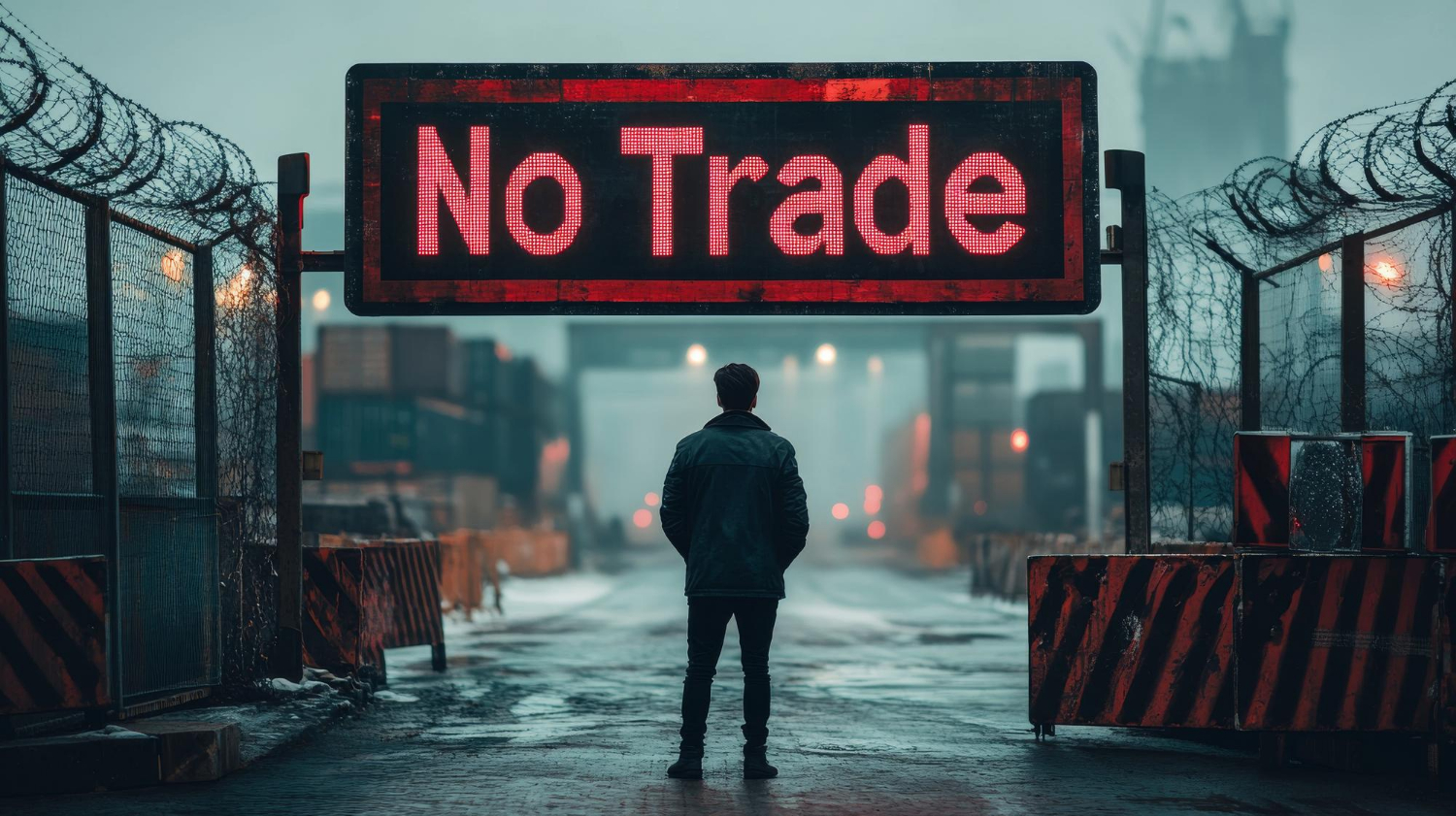
Introduction: A Downturn Under Pressure
Economists are increasingly warning that an escalating tariff war could significantly prolong the current economic downturn in the United States. What began as a strategy to protect domestic industries and rebalance trade has evolved into a complex economic shock that is rippling across supply chains, financial markets, and consumer confidence. Tariffs, by design, raise the cost of imported goods. When applied broadly and retaliated against by trading partners, they can distort prices, reduce trade volumes, and undermine growth at precisely the moment when an economy needs stability and confidence.
The present downturn is characterized by slowing investment, cautious consumers, and fragile global demand. In such an environment, economists argue that tariffs act less like a shield and more like a drag. They raise input costs for businesses, reduce export competitiveness, and invite countermeasures that hurt key industries. While political leaders often frame tariff wars as short-term pain for long-term gain, many economists fear that the costs are front-loaded and the benefits uncertain. As a result, a tariff war risks turning a cyclical slowdown into a prolonged and more painful period of economic weakness.
How Tariffs Amplify Economic Slowdowns
At their core, tariffs function as taxes on imports, and like most taxes, they tend to suppress economic activity. During a downturn, households and firms are already under pressure from declining incomes, uncertain job prospects, and tighter credit conditions. Adding tariffs to this mix raises prices for consumers and increases costs for producers, effectively reducing purchasing power across the economy. Economists emphasize that this combination can amplify an existing slowdown rather than counteract it.
Businesses are particularly vulnerable. Many US manufacturers rely on global supply chains for intermediate goods, components, and raw materials. Tariffs imposed on these inputs raise production costs, forcing firms to choose between absorbing losses, raising prices, or cutting back on investment and employment. None of these options are growth-friendly. Higher prices can dampen demand, while reduced investment weakens productivity growth and long-term competitiveness. In downturns, when margins are already thin, tariffs can be the tipping point that leads firms to delay expansion plans or lay off workers.
Consumer behavior also plays a critical role. When prices rise due to tariffs, households often respond by cutting discretionary spending. This reduction in consumption feeds directly into slower economic growth, as consumer spending accounts for a large share of US GDP. Economists note that even modest increases in prices, when spread across a wide range of goods, can have an outsized psychological effect, reinforcing pessimism and encouraging precautionary saving. In this way, tariffs can deepen the very demand shortfall that characterizes recessions.
Global Retaliation and Trade Disruption
A defining feature of tariff wars is retaliation. When one country raises tariffs, trading partners often respond in kind, leading to a cycle of escalating trade barriers. Economists warn that this dynamic is especially damaging during a downturn because it reduces global trade volumes at a time when international demand could otherwise help support recovery. Retaliatory tariffs often target politically sensitive sectors, such as agriculture or manufacturing, amplifying their economic impact.
The global nature of modern trade means that disruptions rarely stay confined to one country. US exporters facing retaliatory tariffs may lose access to key markets, leading to falling revenues and job losses. Industries that had previously benefited from open trade suddenly find themselves at a disadvantage, not because of inefficiency but because of policy decisions. Over time, lost market share can be difficult to regain, even if tariffs are eventually rolled back.
Economists also point to the weakening of multilateral trade institutions. Prolonged tariff conflicts undermine the credibility of rules-based trade systems, such as those overseen by the World Trade Organization. When countries bypass established mechanisms and resort to unilateral measures, uncertainty increases for businesses and investors. This uncertainty discourages long-term investment and encourages firms to adopt defensive strategies, such as diversifying supply chains or delaying cross-border projects. While diversification can be healthy in the long run, abrupt and forced changes are costly and disruptive, particularly during an economic downturn.
Financial Markets, Investment, and Policy Constraints
Financial markets are highly sensitive to trade tensions, and economists note that tariff wars often trigger volatility that further undermines economic stability. Equity markets may fall as investors anticipate lower corporate earnings, while bond markets can reflect heightened risk aversion. Such volatility affects household wealth and business confidence, reinforcing the downturn. When asset prices fluctuate sharply, firms may find it more expensive to raise capital, and households may feel less secure about their financial future.
Investment decisions are especially affected by uncertainty. Tariff wars create an unpredictable policy environment in which firms struggle to forecast costs, demand, and market access. Economists consistently find that uncertainty depresses investment, as companies postpone or cancel projects until conditions become clearer. In a downturn, when investment is already weak, this hesitation can significantly slow the pace of recovery and reduce potential growth.
Policy responses are also constrained. Central banks, such as the Federal Reserve, can attempt to offset the negative effects of tariffs by lowering interest rates or providing liquidity. However, monetary policy has limits, especially if rates are already low or if inflationary pressures from tariffs complicate decision-making. Fiscal policy could, in theory, provide targeted support, but political divisions and rising public debt may limit the scope and speed of such measures. Economists warn that relying on policy tools to counteract self-inflicted trade shocks is inefficient and risky, particularly when simpler solutions, such as de-escalation, are available.
Conclusion: The Case for De-Escalation and Stability
Economists’ warnings about a prolonged US downturn driven by a tariff war are rooted in both theory and evidence. Tariffs raise costs, disrupt trade, and undermine confidence, all of which are especially harmful during periods of economic weakness. While proponents argue that tariffs can protect domestic industries or correct trade imbalances, economists caution that these goals are difficult to achieve without imposing significant short- and medium-term costs on the broader economy.
The risk is not merely a temporary slowdown but a drawn-out period of subdued growth, reduced investment, and strained international relations. In an interconnected global economy, unilateral trade actions tend to provoke retaliation and uncertainty, magnifying their negative effects. Economists therefore argue that de-escalation, negotiation, and a return to predictable trade rules offer a more effective path to recovery. By reducing trade tensions and restoring confidence, policymakers can help shorten the downturn rather than prolong it, allowing the US economy to refocus on innovation, productivity, and sustainable growth.