

Introduction
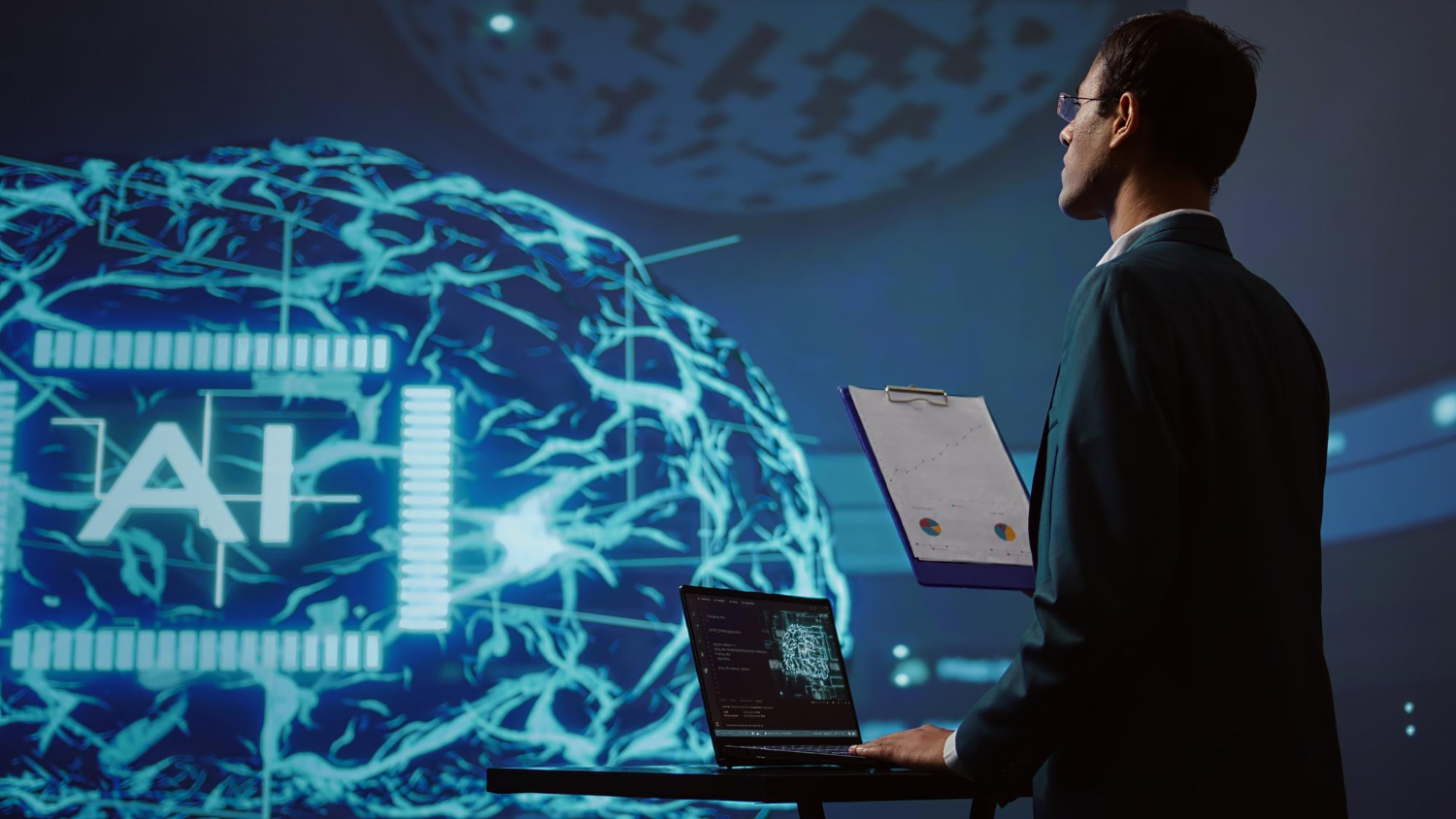
The future of work is undergoing one of the most profound transformations since the Industrial Revolution—this time driven not by steam engines, electricity, or the internet, but by the rapid rise of Artificial Intelligence (AI). Over the last decade, AI has moved from a futuristic concept to an everyday force, shaping industries, influencing global markets, and redefining how humans work. From automating routine tasks to enabling advanced decision-making, AI promises unprecedented levels of efficiency, creativity, and economic growth.
Yet this transformation is not just about technology; it is about people, organizational culture, global workforce dynamics, and evolving digital ecosystems. AI is prompting leaders to rethink job roles, reskill employees, redesign workflows, and adopt entirely new business models. Some fear job displacement, while others see an era of innovation and opportunity. In reality, both perspectives hold truths—but what truly matters is how individuals and businesses adapt.
This article explores how AI is reshaping the workplace across three major dimensions: automation and augmentation, skills and workforce evolution, and new business models and organizational transformation. Together, these forces are driving a new era of work defined by collaboration between humans and intelligent systems.
Automation and Human Augmentation: Redesigning Work Itself
The most visible impact of AI on the future of work lies in its ability to automate tasks—but the deeper and more transformative impact is its potential to augment human capabilities. Rather than simply replacing workers, AI increasingly acts as a digital partner that enhances performance, reduces cognitive load, and expands what individuals can achieve.
AI-Powered Automation Across Industries
Automation is not new, but AI is expanding its reach across white-collar, blue-collar, and creative domains in ways that were previously impossible. Machine learning, natural language processing, computer vision, and robotics have unlocked automation opportunities that go far beyond repetitive or manual tasks.
For example:
- Manufacturing now uses AI-driven predictive maintenance systems that reduce downtime and optimize machinery performance.
- Finance leverages AI algorithms for fraud detection, risk assessment, and real-time trading.
- Customer service uses AI chatbots to resolve queries instantly and personalize support.
- Healthcare relies on AI for diagnostics, patient monitoring, and drug discovery.
- Logistics integrates AI forecasting, smart routing, and robotic warehouse automation.
AI’s automation potential is estimated to influence hundreds of millions of jobs globally over the next decade, but not all tasks are equally affected. Jobs comprised mostly of predictable, structured tasks are the most likely to be automated. Conversely, roles involving creativity, empathy, interpersonal communication, or complex decision-making are enhanced rather than replaced.
The Shift Toward Human–AI Collaboration
The defining pattern of the future workplace is collaboration between humans and intelligent systems. AI complements human strengths by taking over tedious work, analyzing massive datasets, and providing actionable insights. Humans, meanwhile, contribute emotional intelligence, strategic judgment, ethics, and nuanced creativity.
Some of the strongest examples of this collaboration include:
- Doctors working with AI diagnostic tools to detect diseases earlier and more accurately than manual methods alone.
- Lawyers using AI research assistants to review legal documents more efficiently, freeing time for higher-level legal strategies.
- Engineers designing products with AI simulation models, reducing cost, waste, and development time.
- Sales and marketing teams using AI-driven predictive analytics to personalize customer engagement and forecast demand.
This human–AI partnership improves outcomes while reshaping job roles. Instead of eliminating work, AI changes what people focus on—shifting from execution to oversight, from routine tasks to strategic thinking, and from manual outputs to creative problem-solving.
The Rise of Intelligent Tools and Workflows
AI-driven tools are rapidly becoming embedded into everyday work environments, from digital workplaces to field operations. Smart assistants schedule meetings, summarize documents, write reports, and analyze performance metrics. Generative AI tools help professionals draft content, code, designs, prototypes, and data models within seconds.
In many organizations, AI now supports:
- Automated reporting and documentation
- Real-time data visualization
- Smart project management
- Dynamic scheduling and resource allocation
- Workflow optimization and process mining
This evolution is redefining productivity. Workers are not just doing tasks faster—they are doing entirely new types of work that were previously impossible or too resource-intensive.
2. The Evolution of Skills: Preparing for an AI-Driven Workforce
As AI transforms workplaces, the skills people need to thrive are also changing dramatically. The future of work will reward adaptability, lifelong learning, and the ability to work effectively alongside intelligent systems. This shift represents both a challenge and an enormous opportunity.
The Growing Importance of Digital and Data Literacy
Digital literacy is no longer optional—it is foundational. Workers across almost every field need a basic understanding of how AI systems operate, what their limitations are, and how to interpret AI-generated insights. Data literacy, in particular, is emerging as one of the most valuable skills because data fuels AI’s intelligence.
Essential digital skills for the future include:
- Understanding AI tools and interfaces
- Interpreting analytics and dashboards
- Working with digital collaboration technologies
- Recognizing data quality issues
- Basic familiarity with automation systems
These skills empower employees to engage with AI rather than fear it, enabling smoother integration into organizational workflows.
The Rise of Hybrid Skills and Interdisciplinary Roles
The future workforce will not be divided between “tech workers” and “non-tech workers.” Instead, we will see an explosion of roles that blend domain expertise with digital competence. These hybrid roles are already emerging:
- AI-assisted healthcare specialists
- Data-driven marketing strategists
- AI-enhanced financial advisors
- Automation-enabled HR professionals
- Human–robot interaction managers
- Prompt engineers working alongside creative teams
In many cases, professionals who combine traditional knowledge with AI fluency will become the most valuable contributors in their organizations.
Soft Skills Become More Important, Not Less
Contrary to fears that AI will make human skills obsolete, the opposite is happening. As machines take over routine tasks, human-centric skills become even more crucial.
High-demand soft skills include:
- Emotional intelligence
- Creativity and innovation
- Critical thinking
- Leadership and people management
- Adaptability and resilience
- Ethical judgment
- Communication and storytelling
AI amplifies the importance of these uniquely human qualities because machines lack empathy, moral reasoning, and cultural understanding. Organizations increasingly value employees who can lead, collaborate, and navigate complex social environments—even as technology becomes more advanced.
Continuous Learning Becomes the New Norm
The rapid evolution of AI means the half-life of skills is shrinking. Knowledge that once lasted a decade may now become outdated in a few years. To remain relevant, workers must embrace a culture of continuous learning—upskilling, reskilling, and adopting new technologies as they emerge.
Governments, companies, and educational institutions are responding by offering:
- Flexible online learning platforms
- Micro-credentials and digital certifications
- Corporate upskilling programs
- AI-focused training bootcamps
- Hybrid learning models combining work and study
This global shift reflects a new reality: lifelong learning is becoming a central part of every career.
New Business Models and Organizational Transformation
AI does not only change how individuals work—it also disrupts entire industries, reshapes competition, and forces businesses to rethink their strategies and structures. Companies that embrace AI proactively will gain a significant advantage, while those that resist risk being left behind.
AI-Driven Business Models and Innovation
AI enables new products, services, and revenue models that were not feasible before. Today’s most disruptive innovations are tied to AI in areas such as:
- Personalized digital services
- On-demand platforms and gig networks
- Autonomous systems
- Intelligent manufacturing
- Predictive commerce
- AI-native SaaS tools
- Smart logistics and supply chains
Companies are turning AI from an operational tool into a core driver of innovation. For example, AI-generated content and design tools allow businesses to launch new campaigns or prototypes in days instead of months. AI-driven customer insights create hyper-personalized user experiences. Predictive algorithms help companies anticipate problems before they happen, reducing costs and improving reliability.
Smarter, Leaner, More Adaptive Organizations
AI is reshaping organizational structures. Instead of traditional hierarchical models, businesses are adopting more agile, data-driven, and decentralized systems. AI supports:
- Rapid decision-making based on real-time data
- Flexible team structures designed around projects rather than departments
- Dynamic resource allocation
- Automated administrative tasks
- Intelligent performance tracking
- More efficient hiring and talent management
By reducing bureaucratic overhead, AI allows companies to focus on high-value activities like creativity, innovation, and customer relationships.
Ethical AI and Governance as Strategic Priorities
As AI becomes embedded in workflows, ethical considerations also grow in importance. Businesses must navigate issues such as:
- Data privacy
- Transparency and explainability
- Algorithmic bias and fairness
- Security and cybersecurity risks
- Accountability and compliance
Organizations are increasingly establishing AI governance frameworks to ensure systems are trustworthy, transparent, and aligned with human values.
This focus not only reduces risk but also enhances stakeholder trust—critical for long-term innovation.
The Global Talent Marketplace and Remote Work Transformation
AI has accelerated the shift toward remote, hybrid, and global work models. Intelligent collaboration tools, AI-powered communication assistants, and virtual work environments are breaking down geographical barriers. As a result:
- Companies can hire talent from anywhere
- Workers can access global opportunities
- Teams can collaborate across time zones using AI-supported workflows
- Virtual meetings, training, and conferences are becoming more immersive
The future of work is increasingly borderless, inclusive, and flexible—powered by intelligent digital ecosystems.
Conclusion
Artificial Intelligence is not merely a technological trend; it is a foundational force transforming the future of work across every industry and profession. AI-driven automation is reshaping tasks, augmenting human abilities, and driving unprecedented productivity. At the same time, the evolution of skills and the rise of hybrid roles are redefining what it means to be employable in a connected, intelligent, and rapidly evolving world.
Organizations that embrace AI will unlock new business models, improve decision-making, and gain competitive advantages—while those that ignore it may fall behind. Yet this transformation is not just about efficiency; it is about reshaping work to be more human, creative, and purposeful.
The future belongs to those who can harness the power of AI while cultivating the uniquely human skills that machines cannot replace. As AI continues to advance, the line between human and machine collaboration will grow stronger—not to eliminate jobs, but to redefine work itself. In this new era, the most successful individuals and organizations will be those that embrace adaptability, innovation, and lifelong learning while using AI as a powerful partner in growth.