


Introduction
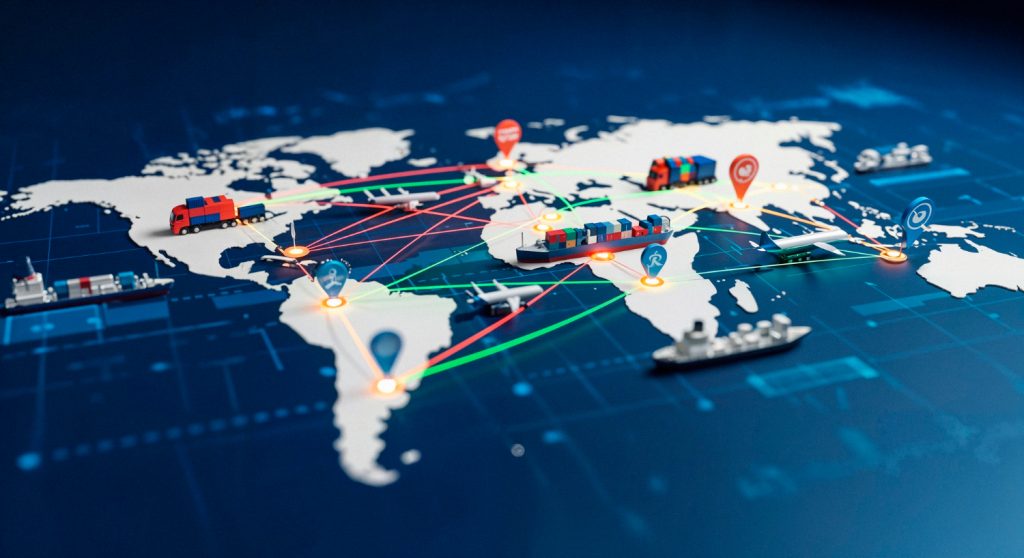
In today’s hyperconnected world, global supply chains form the backbone of economic stability and growth. From the smartphone in your pocket to the groceries on your kitchen shelf, nearly every product depends on a complex web of manufacturers, suppliers, transporters, and retailers spread across continents. This intricate system allows nations and businesses to leverage specialization, reduce costs, and maximize efficiency — the hallmarks of modern globalization.
However, this same interdependence that enables efficiency also creates vulnerability. When supply chains falter — whether due to geopolitical tensions, pandemics, natural disasters, or logistical bottlenecks — the repercussions ripple across industries, national economies, and financial markets. Disruptions can lead to production halts, inflation, shortages, unemployment, and, ultimately, economic downturns.
This article explores how global supply chain issues can trigger or intensify economic downturns, examining the mechanisms through which disruptions spread, historical examples that reveal their magnitude, and strategies that governments and businesses can adopt to build resilience.
The Global Supply Chain: The Engine of Modern Economic Growth
To understand how supply chain issues can lead to downturns, one must first grasp how deeply intertwined modern economies are. Over the past four decades, globalization has transformed the structure of production and trade. Corporations shifted from vertically integrated models — where a single firm controlled all stages of production — to globally distributed networks designed for efficiency and cost minimization.
The Rise of Interconnected Production Networks
In the latter half of the 20th century, companies realized that different regions offered comparative advantages: low labor costs in Asia, advanced technologies in Europe, and vast consumer markets in North America. By spreading production processes across these regions, firms could maximize efficiency. For example, an automobile might be designed in Germany, use components made in Japan, and be assembled in Mexico for sale in the United States.
This global division of labor spurred exponential growth in international trade. According to World Bank data, global merchandise trade increased from about 37% of world GDP in 1980 to over 60% by 2019. Supply chains became not just commercial conduits but lifelines of national economies.
The “Just-in-Time” Revolution
A major innovation that fueled supply chain efficiency was the “Just-in-Time” (JIT) inventory system pioneered by Toyota in the 1970s. The principle was simple: minimize inventory costs by receiving materials and components only when needed for production. This system allowed businesses to cut warehousing expenses and improve cash flow, but it also left them exposed. With little buffer stock, even minor disruptions could halt production entirely.
When global supply chains function smoothly, JIT models drive profitability and efficiency. But when crises strike — as seen during the COVID-19 pandemic — JIT systems magnify vulnerabilities. The absence of redundancy turns efficiency into fragility, making economies susceptible to cascading failures.
The Economic Chain Reaction
A disruption at one link of the chain often triggers a domino effect across industries. For instance, a shortage of semiconductors in Taiwan can stall car production in Detroit, delay smartphone launches in South Korea, and affect shipping demand in Singapore. Each interruption multiplies downstream effects, reducing output, employment, and consumer confidence.
Thus, the very architecture of globalization — designed to maximize interconnected efficiency — becomes a channel for amplifying shocks. The same system that enabled prosperity can, under strain, become a powerful engine of economic contraction.
How Supply Chain Disruptions Trigger Economic Downturns
Global supply chain issues do not merely cause temporary shortages; they can reshape entire economic landscapes. The mechanisms through which these disruptions lead to downturns are multifaceted — spanning production slowdowns, inflationary pressures, financial instability, and consumer demand shifts.
a. Production Disruptions and Output Decline
At the heart of every supply chain issue lies the most visible effect: production stoppage. When a critical input is unavailable, even in small quantities, the production process can grind to a halt. Consider the automotive industry — modern vehicles rely on more than 30,000 individual parts, sourced from hundreds of suppliers worldwide. The absence of even a $5 microchip can delay the completion of a $40,000 car.
During the 2020–2022 semiconductor crisis, global automobile production fell by over 10 million vehicles. This decline not only affected manufacturers but also dealerships, logistics providers, and raw material suppliers. In economies where manufacturing constitutes a significant share of GDP, such slowdowns contribute directly to recessionary pressures.
b. Inflation Through Supply Shortages
Supply chain breakdowns also manifest in inflation — particularly cost-push inflation. When goods become scarce, prices rise. The COVID-19 pandemic vividly illustrated this dynamic: container shortages, port congestion, and raw material scarcity drove up the prices of everything from timber and steel to consumer electronics.
Between 2020 and 2022, global shipping costs increased by more than 400% on average. The price of a standard shipping container from Shanghai to Los Angeles jumped from roughly $1,500 to over $10,000. These higher logistics costs were passed on to consumers, fueling inflation across major economies.
Persistent inflation erodes purchasing power, constrains consumer spending, and forces central banks to raise interest rates. In turn, higher borrowing costs suppress investment and demand — a classic pathway toward economic slowdown or recession.
c. Labor Market Consequences
When production slows, companies respond by reducing working hours, delaying hiring, or laying off workers. Unemployment rises, and household income falls. Moreover, disruptions often trigger labor mismatches — where available workers do not have the skills required in unaffected sectors.
For example, the pandemic led to mass layoffs in logistics, travel, and hospitality, while e-commerce and digital service industries struggled to fill new roles. The reallocation of labor took time, and during that adjustment period, consumer spending — which drives two-thirds of GDP in many economies — declined significantly.
d. Financial System Contagion
Supply chain disruptions also reverberate through the financial system. Businesses facing production delays and rising input costs may default on loans, triggering stress in the banking sector. Investors, sensing uncertainty, withdraw from equities and commodities, driving market volatility.
For instance, during the 2021–2022 shipping crisis, many small manufacturers were unable to fulfill export contracts due to shipping delays, leading to widespread defaults in Asia’s export-driven economies. Financial contagion can thus spread beyond the real economy, tightening credit conditions and compounding the downturn.
e. Loss of Consumer and Investor Confidence
Economic psychology plays a crucial role. Persistent shortages, rising prices, and uncertainty about the future erode consumer confidence. When households postpone purchases and businesses delay investments, aggregate demand falls — a defining feature of economic downturns.
The 2021–2023 global supply chain crisis, for example, saw consumer sentiment in the U.S. and Europe plunge to decade lows. Even as employment recovered post-pandemic, inflation and persistent product shortages (from cars to baby formula) weakened spending appetite, restraining the pace of recovery.
f. Geopolitical Amplifiers
Geopolitical tensions can transform supply chain issues into systemic crises. The 2022 Russia–Ukraine conflict disrupted energy and food supplies, sending global prices soaring. Russia’s role as a major exporter of natural gas and Ukraine’s importance in grain markets underscored how concentrated supply dependencies can destabilize global stability.
Energy shortages in Europe triggered factory shutdowns, while rising food prices strained emerging economies. The resulting inflation and economic contraction exemplified how geopolitically induced supply shocks can drive global downturns.
Case Studies and Lessons: When Supply Chains Broke the Economy
Examining historical examples provides powerful insights into how supply chain disruptions evolve into broader economic downturns — and how nations have responded.
a. The 1973 Oil Crisis: Birth of Stagflation
Perhaps the most famous supply chain-induced downturn occurred in 1973, when the Organization of Arab Petroleum Exporting Countries (OAPEC) imposed an oil embargo on nations supporting Israel during the Yom Kippur War. Oil prices quadrupled within months, leading to an energy shock that rippled across industries.
As transportation and manufacturing costs soared, economies faced simultaneous inflation and stagnation — a rare combination known as stagflation. GDP growth in the U.S. fell from 5.6% in 1973 to -0.5% in 1974, while inflation peaked at 12%. The crisis revealed how dependence on a single critical input (in this case, oil) could destabilize global growth.
b. The 2011 Japanese Earthquake and Tsunami
Natural disasters can also cripple supply chains. The 2011 Tōhoku earthquake and tsunami devastated Japan’s manufacturing hubs, disrupting global production of automobiles and electronics. Japan accounted for about 20% of the world’s semiconductor and automotive component production at the time.
Within weeks, automakers like General Motors and Toyota had to suspend production worldwide due to shortages of specific parts. The global economic cost exceeded $235 billion — making it one of the costliest disasters in history. The event emphasized how geographic concentration of key industries creates systemic risk for global production networks.
c. The COVID-19 Pandemic: A Modern Supply Chain Collapse
No recent event has demonstrated supply chain fragility more dramatically than the COVID-19 pandemic. Lockdowns in China — the world’s manufacturing powerhouse — halted production, while shipping delays and border closures paralyzed logistics. As economies reopened, surging demand collided with constrained supply, causing shortages in semiconductors, raw materials, and consumer goods.
The ripple effects were staggering:
- Global GDP contracted by 3.1% in 2020, according to the IMF.
- Shipping costs increased over 400%, while delivery times doubled.
- Inflation in advanced economies reached levels not seen in 40 years.
The pandemic exposed the dangers of over-optimization: supply chains built purely for efficiency, not resilience. Companies and governments have since begun rethinking strategies — focusing on diversification, regionalization, and digitalization to mitigate future shocks.
d. The Russia–Ukraine War: Energy and Food Chain Disruptions
The 2022 Russia–Ukraine war created another global supply shock. Russia supplied roughly 17% of the world’s natural gas and 12% of its oil, while Ukraine provided 10% of global wheat exports. The conflict disrupted both, driving energy and food inflation worldwide.
Europe faced soaring gas prices that shut down industries, while emerging economies in Africa and Asia battled food shortages. Global inflation surged to nearly 9% in 2022 — the highest in four decades — forcing aggressive monetary tightening that slowed growth and triggered recessions in several economies.
These case studies reveal a consistent pattern: supply chain shocks rarely remain local. Their effects spread through trade, finance, and sentiment channels, transforming disruptions into full-fledged economic downturns.
Conclusion: Building Resilient Supply Chains for a Stable Future
The story of global supply chains is one of both triumph and fragility. They have powered unprecedented economic growth, lifted millions out of poverty, and revolutionized production and consumption. Yet, as recent decades have shown, their vulnerabilities can also become catalysts for global downturns.
When supply chains break, economies face a web of consequences — from production halts and inflation to unemployment and financial instability. The COVID-19 pandemic, geopolitical conflicts, and natural disasters have all highlighted the need to rethink the architecture of global trade and production.
The Path Forward: Resilience Over Efficiency
To safeguard against future downturns, nations and corporations must pivot from a purely efficiency-driven model to one rooted in resilience. This involves:
- Diversification: Reducing dependence on single suppliers or regions for critical materials.
- Regionalization: Shortening supply chains by encouraging local or regional production hubs.
- Digitalization: Leveraging AI, blockchain, and real-time analytics to monitor and predict disruptions.
- Strategic Reserves: Maintaining buffer inventories of essential components and commodities.
- Sustainability and Collaboration: Promoting environmentally sustainable and cooperative trade practices to reduce systemic risk.
A Balanced Future
Ultimately, the goal is balance. Efficiency and cost reduction will always remain key drivers of global commerce, but they must coexist with redundancy, flexibility, and foresight. As the world faces new challenges — from climate change to geopolitical fragmentation — building resilient supply chains is not merely an economic imperative but a safeguard for global stability.
In essence, when supply chains are strong, economies thrive. When they fracture, the world feels the tremors. The lessons of recent history are clear: the path to preventing future downturns lies not in abandoning globalization, but in reinforcing its foundations to withstand the inevitable storms ahead.