

Introduction
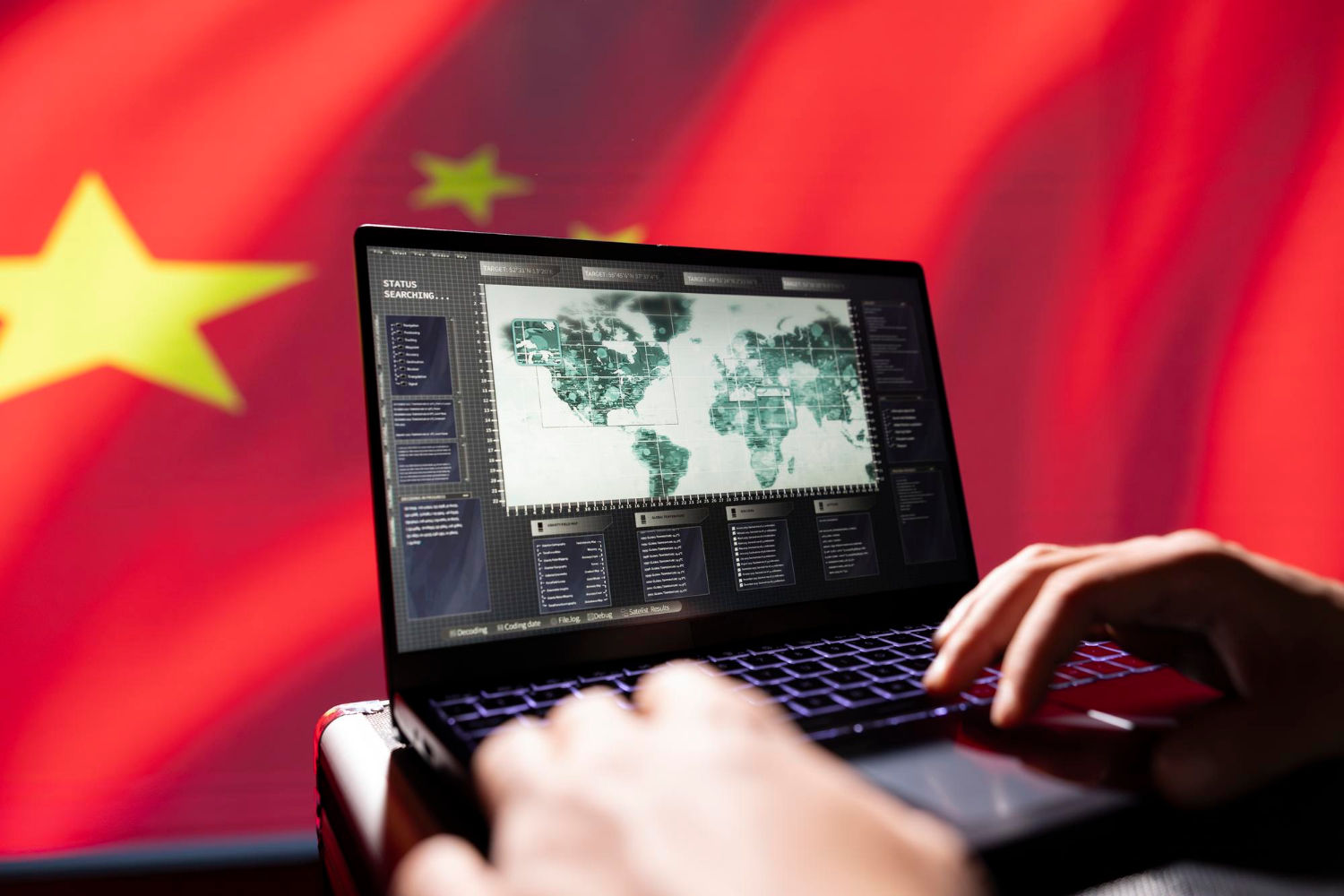
Trade tensions between the United States and China remain one of the most powerful sources of uncertainty for the global economy. As the world’s two largest economic powers compete over manufacturing, technology, supply chains, strategic industries, and international influence, financial markets are increasingly exposed to sudden policy changes and geopolitical developments. A fresh escalation in the trade dispute could create a new wave of volatility across global stock markets, currencies, commodities, and investment portfolios.
The economic relationship between Washington and Beijing is deeply connected despite years of strategic rivalry. American companies continue to depend on Chinese manufacturing networks, while China remains closely linked to global consumers, multinational corporations, international investors, and the U.S.-centered financial system. This complicated relationship means that any significant disruption between the two countries can quickly spread beyond their borders.
Trade conflicts are no longer limited to tariffs on imported goods. The competition now covers advanced semiconductors, artificial intelligence, electric vehicles, batteries, critical minerals, renewable energy equipment, telecommunications, data security, and other strategically important sectors. As a result, investors are dealing with a much broader range of risks than during earlier periods of trade confrontation.
Financial markets generally dislike uncertainty because businesses and investors make decisions based on expectations about future economic conditions. When governments unexpectedly announce tariffs, export restrictions, investment controls, or retaliatory measures, those expectations can change rapidly. Companies may delay investments, consumers may face higher prices, and investors may move money toward assets considered relatively safer.
The possibility of renewed U.S.-China trade tensions therefore represents more than a disagreement between two governments. It could become a major global market event with consequences for economic growth, inflation, corporate earnings, interest rates, and international capital flows.
Why U.S.-China Trade Tensions Are Becoming a Major Market Risk
The global economy has changed significantly since earlier rounds of the U.S.-China trade conflict. Supply chains have become more diversified, governments are placing greater importance on economic security, and competition for technological leadership has intensified. However, these changes have not eliminated the financial risks associated with tensions between Washington and Beijing.
One of the biggest concerns is the possibility of additional tariffs. Tariffs increase the cost of imported products and can create difficult decisions for companies. Businesses must either absorb the additional costs, reduce expenses elsewhere, change suppliers, or pass higher prices to consumers.
Each option can have economic consequences.
If companies absorb tariff costs, profit margins may decline. If businesses increase prices, inflationary pressures could rise. If manufacturers move production, they may face substantial expenses and operational disruptions. These possibilities can create uncertainty about future corporate earnings, which can quickly affect stock valuations.
Technology competition adds another layer of complexity. The United States has increasingly focused on protecting advanced technologies considered important for national security and economic leadership. China, meanwhile, is investing heavily in developing domestic technological capabilities and reducing dependence on foreign suppliers.
This competition creates significant uncertainty for semiconductor manufacturers, technology companies, artificial intelligence businesses, cloud service providers, and electronics producers.
Companies operating internationally could find themselves caught between different regulatory systems. A business may have customers in China, suppliers elsewhere in Asia, investors in the United States, and manufacturing operations spread across multiple countries. New restrictions could force these companies to redesign complicated business strategies.
Another major concern involves critical minerals and industrial materials.
Modern economies depend on materials used in electric vehicles, batteries, electronics, defense equipment, renewable energy technologies, and advanced manufacturing. China plays an important role in several global processing and supply networks. Any restrictions affecting these materials could create shortages, increase costs, and disrupt production.
Investors must also consider the political nature of the trade relationship.
Economic negotiations can change rapidly depending on elections, diplomatic disputes, security concerns, and domestic political pressures. Markets may respond positively to signs of negotiations one week and decline sharply after unexpected restrictions are announced the next.
This unpredictability can increase market volatility even when the actual economic consequences of new policies remain uncertain.
The biggest danger may not be one individual tariff or restriction. The greater risk is a cycle of escalation.
One country introduces new measures. The other responds with restrictions of its own. Additional industries become involved. Businesses delay investments because they cannot predict future rules. Investors reduce exposure to riskier markets.
Eventually, a political dispute can develop into a broader economic problem.
How Global Stock Markets and Investors Could React
A major escalation in U.S.-China trade tensions could immediately affect global stock markets. However, the impact would probably not be equal across every sector or country.
Technology stocks could experience significant pressure because of their dependence on global supply chains and international markets. Many large technology businesses generate revenue from multiple countries and rely on complicated manufacturing networks.
Semiconductor companies may be particularly vulnerable.
Advanced chips have become strategically important for artificial intelligence, data centers, smartphones, automobiles, industrial equipment, and defense technologies. Restrictions affecting semiconductor sales or manufacturing equipment could create uncertainty about future revenue and growth opportunities.
Consumer electronics companies could also face challenges.
Many electronic products contain components manufactured or assembled across several countries. Even companies that have diversified production away from China may continue to depend on suppliers connected to Chinese industrial networks.
Automobile companies represent another potentially sensitive sector.
The global automotive industry is undergoing a major transition toward electric vehicles. China has become an important participant in electric vehicle manufacturing and battery supply chains. Increased trade barriers could affect competition, production costs, investment decisions, and consumer prices.
Industrial stocks could face similar pressures.
Companies producing machinery, transportation equipment, construction products, and manufacturing technologies often depend on global economic activity. If trade tensions reduce business investment or weaken international commerce, expectations for industrial earnings could decline.
Financial companies would also be affected indirectly.
Banks benefit from economic growth, business activity, lending demand, and stable financial conditions. A prolonged trade conflict could reduce corporate investment and increase concerns about credit risks. Market volatility can also influence investment banking activity and investor confidence.
However, not every market sector would necessarily decline.
Some companies could benefit from changing supply chains. Businesses providing manufacturing services in alternative locations may receive additional investment. Logistics companies, infrastructure developers, automation providers, and industrial technology firms could benefit from efforts to diversify production networks.
Investors could also increase demand for defensive sectors.
Businesses providing essential products and services may appear more attractive during periods of uncertainty. Healthcare companies, utilities, and selected consumer businesses could receive greater investor attention if concerns about global growth increase.
The U.S. dollar could experience complicated movements.
During periods of market stress, investors sometimes move capital toward dollar-denominated assets because of the size and importance of American financial markets. However, if trade tensions create concerns about U.S. economic growth, fiscal conditions, or inflation, currency movements could become more unpredictable.
Gold could attract additional investor interest as well.
Periods of geopolitical uncertainty and financial instability often increase attention toward assets viewed as potential stores of value. Nevertheless, gold prices would also be influenced by interest rates, currency movements, inflation expectations, and central bank policies.
Emerging markets could experience particularly significant volatility.
Many developing economies depend on international trade, commodity exports, foreign investment, and global capital flows. A slowdown in the United States or China could reduce demand for exports and increase pressure on local currencies.
Investors may also withdraw capital from riskier markets during periods of uncertainty. This can create additional pressure on stocks, bonds, and currencies in developing economies.
The result could be a highly complicated market environment in which different assets move sharply based on changing expectations.
Supply Chains, Inflation, and the Threat to Global Economic Growth
The most important long-term consequences of U.S.-China trade tensions may develop outside financial markets before eventually returning to influence investor behavior.
Global supply chains were created over decades to reduce production costs and improve efficiency. Companies selected suppliers, manufacturing locations, transportation networks, and distribution systems based largely on economic considerations.
Geopolitical competition is changing this approach.
Businesses are increasingly considering political stability, national security policies, trade regulations, and diplomatic relationships when making investment decisions.
This transformation could make the global economy more resilient in certain areas, but it could also make production more expensive.
Moving a factory is not a simple process.
Companies must find suitable locations, build facilities, train workers, establish supplier relationships, develop transportation networks, and comply with new regulatory systems. These changes require time and substantial amounts of capital.
The cost of restructuring supply chains may eventually reach consumers through higher prices.
This creates a difficult challenge for central banks.
If trade restrictions increase inflation while simultaneously reducing economic growth, monetary policymakers could face conflicting pressures. Raising interest rates may help control inflation but could weaken economic activity. Cutting rates may support growth but could increase inflationary risks.
Financial markets would have to continuously evaluate these possibilities.
Bond yields could move sharply as investors change expectations about inflation and monetary policy. Stock valuations could also respond because interest rates influence the present value investors assign to future corporate earnings.
Global economic growth could weaken if businesses become increasingly cautious.
Companies generally prefer predictable rules when making long-term investments. A manufacturer considering a multibillion-dollar factory wants confidence that products can be sold internationally and that essential components will remain available.
Trade uncertainty makes these decisions more difficult.
Businesses may delay projects, reduce investment, or maintain larger cash reserves. While these decisions may protect individual companies from uncertainty, collectively they can slow economic growth.
China’s domestic economy is also important for global markets.
China represents a major source of demand for commodities, industrial products, luxury goods, machinery, and consumer products. A significant slowdown in Chinese economic activity could affect companies and countries worldwide.
Commodity-producing economies may be particularly exposed.
Countries exporting metals, energy products, and agricultural goods could experience lower demand if Chinese industrial activity weakens. Falling commodity prices could reduce government revenue and economic growth in exporting nations.
The United States would also face economic consequences from prolonged tensions.
American consumers and businesses could experience higher costs for imported products and manufacturing components. Companies that depend on Chinese customers could face declining sales or regulatory challenges.
The broader danger is economic fragmentation.
Instead of one highly integrated global trading system, the world could gradually divide into competing economic networks. Countries and companies may face pressure to choose preferred technology systems, supply chains, payment networks, and trading relationships.
Such fragmentation could reduce economic efficiency.
Businesses may need to create separate products for different markets, maintain duplicate supply chains, or comply with conflicting regulations. These additional costs could reduce productivity and corporate profitability.
Smaller economies could find themselves in particularly difficult positions.
Many countries maintain important economic relationships with both the United States and China. They may prefer to avoid choosing sides, but increasing strategic competition could make neutrality more challenging.
At the same time, some economies could benefit from supply chain diversification.
Countries capable of attracting manufacturing investment may experience stronger growth. Businesses searching for alternatives could expand production across Southeast Asia, Latin America, India, and other regions.
However, creating entirely new industrial ecosystems requires infrastructure, skilled workers, reliable energy supplies, transportation systems, and supportive government policies.
Therefore, supply chain diversification will probably be gradual rather than immediate.
For investors, this means the U.S.-China trade conflict is not simply a short-term trading opportunity. It represents a structural change that could influence markets for many years.
Conclusion
Renewed U.S.-China trade tensions could become one of the most important sources of global financial market volatility. The economic relationship between the two countries remains deeply connected, while their strategic competition continues to expand into technology, manufacturing, critical minerals, energy, and national security.
A major escalation could affect stock markets, currencies, commodities, bonds, corporate profits, consumer prices, and global economic growth.
Technology companies, semiconductor manufacturers, automobile producers, industrial businesses, and multinational corporations could face significant uncertainty. Emerging markets and commodity-dependent economies could also experience pressure if global trade slows or investor confidence weakens.
The situation is particularly complicated because trade restrictions could simultaneously increase costs and reduce economic growth. Such an environment would create challenges for central banks and make financial markets more sensitive to inflation reports, economic data, interest rate decisions, and political announcements.
Investors should recognize that future volatility may not follow a simple pattern.
Markets could decline sharply after new restrictions, recover on expectations of negotiations, and then reverse again following retaliatory measures. Different sectors and countries could experience dramatically different outcomes.
The longer-term consequences may be even more important.
Companies are redesigning supply chains, governments are protecting strategic industries, and countries are competing for technological leadership. These developments could reshape global trade and investment patterns for decades.
At the same time, economic competition does not automatically mean a complete separation between the United States and China. The enormous scale of trade, investment, and corporate relationships between the two economies creates powerful incentives to maintain some level of stability.
The future direction of global markets may therefore depend on whether both countries can manage competition without allowing political disagreements to develop into a broader economic confrontation.
For investors, businesses, and policymakers, uncertainty is likely to remain the central challenge. Markets can adjust to tariffs, regulations, and changing supply chains when policies are relatively predictable. Sudden escalation is far more dangerous because it forces investors and companies to rapidly reconsider expectations.
If tensions continue to intensify, global markets could enter a period characterized by larger price movements, changing investment strategies, and increased demand for protection against economic uncertainty.
Ultimately, the U.S.-China trade relationship has become much more than a bilateral economic issue. It is now one of the major forces shaping the future of globalization, technological development, manufacturing, and international finance.
Whether the next chapter brings negotiation or confrontation will have consequences far beyond Washington and Beijing. The decisions made by both governments could influence economic growth, corporate investment, consumer prices, and financial markets across the world.
For that reason, the possibility of a new wave of global market volatility should not be underestimated. The world economy has become deeply interconnected, and disruptions involving its two largest economic powers can travel rapidly across industries and borders.
The coming period may test the ability of governments, companies, and investors to adapt to an increasingly uncertain global economic system. Those capable of understanding changing trade relationships, managing risk, and responding to structural economic shifts may be better positioned to navigate whatever comes next.